
The short answer: no, your employer cannot legally take your tips. Under federal law, tips belong to the employee who earned them — full stop. But the rules around tip credits, tip pools, and credit card deductions are more layered than a single yes or no, and employers who aren’t playing by the rules are counting on you not knowing the difference. Here’s exactly where the law stands.
What Does Federal Law Say About Employer Tips?
The Fair Labor Standards Act (FLSA) is the federal law that governs how tips are handled in the United States. Its position is clear: tips are the property of the employee who receives them. According to the U.S. Department of Labor, employers have no legal right to any portion of an employee’s tips, regardless of how much that employee earns in a given shift.
This protection applies whether you’re a server, bartender, barback, hotel housekeeper, or delivery driver — any worker who regularly receives more than $30 per month in tips is classified as a tipped employee under the FLSA and is covered by these protections.
More than 4 million Americans work in tipped occupations, and the law was written specifically to make sure their tips stay in their pockets.
What Is a Tip Credit and Can It Reduce My Pay?
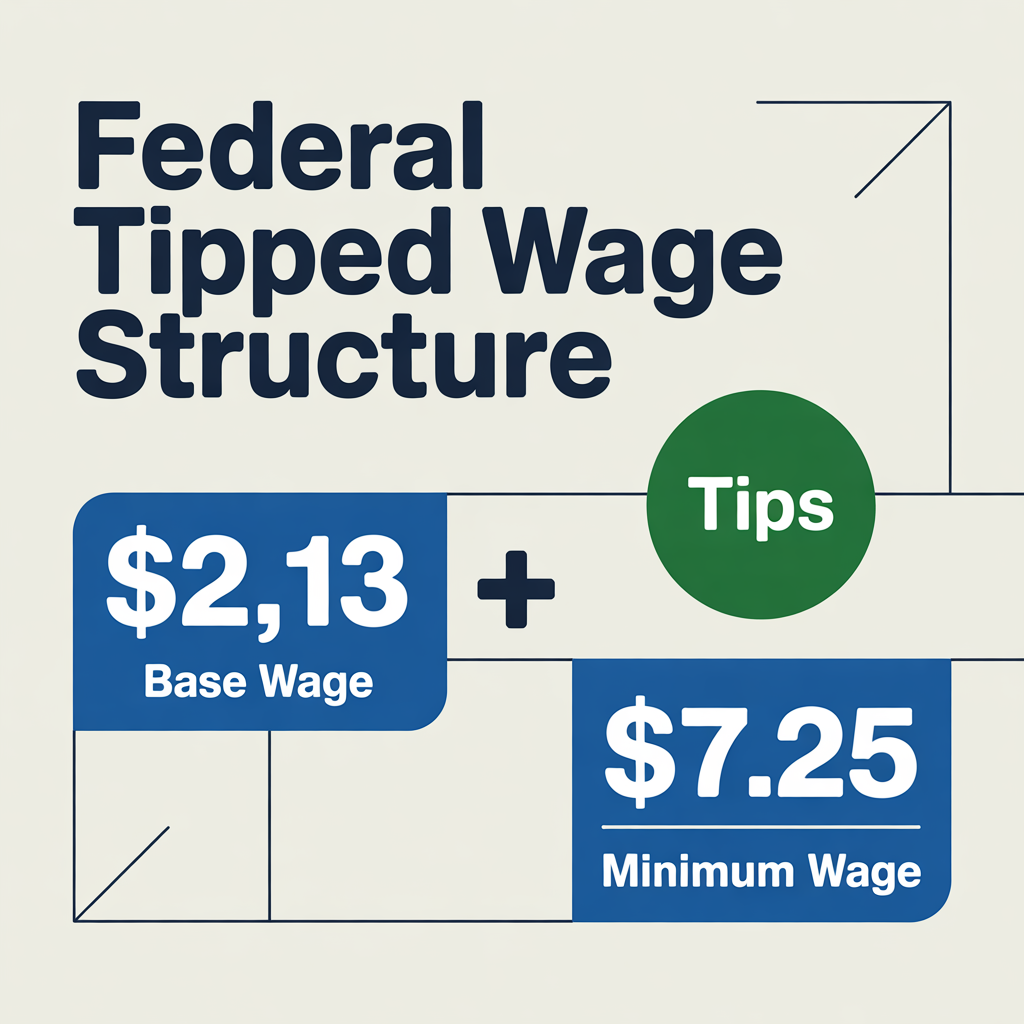
A tip credit is not the same as taking your tips. It’s a legal mechanism that allows employers to pay tipped workers a lower base wage — as low as $2.13 per hour under federal law — on the assumption that tips will make up the difference to reach the federal minimum wage of $7.25 per hour. The maximum tip credit an employer can claim is $5.12 per hour.
The key condition: if your tips don’t cover the gap, your employer must make up the difference. If you walk out of a slow Tuesday shift having earned less than minimum wage, your employer is legally required to top up your pay. If they’re not doing that, it’s a wage violation — and you have recourse.
Several states have eliminated the tip credit entirely. California, Minnesota, Oregon, Washington, and Nevada require employers to pay tipped workers the full state minimum wage before tips. If you work in one of these states, your employer cannot use a tip credit at all — your tips are entirely on top of a full base wage.
Can My Employer Deduct Credit Card Processing Fees From My Tips?
Under federal law, yes — but only the exact processing fee amount, nothing more. If a customer tips you $20 on a credit card and the processing fee is 3%, your employer may deduct approximately $0.60 from that tip. They cannot round up, take a flat percentage that exceeds the actual fee, or use this as a general revenue source.
Some states are stricter. California and Florida prohibit employers from deducting credit card fees from tips at all — the full tip must be passed to the employee, and the employer absorbs the processing cost as a business expense. Minnesota operates similarly. If you’re unsure of your state’s rule, check with your state’s Department of Labor.
What Is Tip Pooling and Is It Legal?
Tip pooling is the practice of combining tips earned by multiple employees and redistributing them across the team. It is legal under the FLSA, but only under specific conditions. Employers may not keep any portion of the pooled tips for themselves.
There are two types of tip pools under current federal rules:
- Employer takes a tip credit: The pool can only include employees who customarily and regularly receive tips — servers, bartenders, bussers, food runners. Back-of-house workers like cooks and dishwashers cannot be included.
- Employer does not take a tip credit (pays full minimum wage): The pool can legally include back-of-house employees like cooks and dishwashers. This gives restaurants flexibility to share the tipping economy with kitchen staff.
In both cases, managers and supervisors cannot receive any share of a tip pool distribution — even if they occasionally serve tables. The only tips a manager can legally keep are those directly given to them by a customer for service they personally and solely provided.
Violations of tip pooling rules carry real consequences. A Dallas-area restaurant chain, Hard Eight BBQ, was ordered to pay approximately $867,500 in unpaid tips and overtime after allowing hourly managers to participate in its tip pool.
Can Managers Take Tips?
No — managers and supervisors cannot take part in a tip pool or keep any portion of employee tips. This rule applies regardless of whether the employer takes a tip credit. A manager who participates in a tip pool — even informally — is violating the FLSA. The law defines managers broadly: if someone has meaningful authority to hire, fire, set schedules, or discipline employees, they are excluded from tip pools.
Employers who illegally keep employee tips face fines of up to $1,162 per violation under current DOL rules — and that’s per incident, not per employee.
Are Service Charges the Same as Tips?
No — and this distinction matters a lot. A service charge is a mandatory fee added to a bill by the employer — for example, an automatic 20% gratuity on parties of eight or more. Under the FLSA, service charges belong to the employer, not the employee. The employer can keep the entire amount, share some with staff, or distribute it however they choose.
This trips up a lot of workers. If your restaurant adds an automatic gratuity to large tables and you assume that money is yours, you may be surprised to find out that legally, it isn’t — unless your employer has a specific policy to pass it through. The IRS also treats service charges differently from tips for tax purposes, classifying them as regular wages rather than tip income.
How Common Is Tip Theft, and What Should You Do About It?
More common than most workers realize. Research on workers in Chicago, Los Angeles, and New York found that 12% of tipped workers had tips stolen by their employer or supervisor — and that’s in a legal environment where tip theft is prohibited.
If you suspect your employer is taking tips illegally, here’s what to do:
- Document everything. Keep a personal daily log of your tips — cash, credit card, and any tip pool distributions you receive. Note discrepancies between what you earned and what you were paid out. An app like Tip Boss makes this easy by letting you track every shift in one place, giving you a timestamped record that could be critical evidence in a wage complaint.
- Review your pay stubs. Compare what your employer reports as tip income against what you actually received.
- File a complaint with the DOL. The U.S. Department of Labor’s Wage and Hour Division investigates tip theft and wage violations. You can file a complaint online, and retaliation against workers who file complaints is itself a federal violation.
- Consult an employment attorney. Many wage and hour attorneys work on contingency, meaning you pay nothing unless they recover wages for you.

State Law Can Give You Even More Protection
Federal law sets the floor — states can and often do go further. Here’s a quick look at states with notably stronger tip protections:
- California: No tip credit allowed. Employers must pay full state minimum wage before tips. Credit card fees cannot be deducted from tips. Shift supervisors who lack hire/fire authority can participate in tip pools.
- Minnesota: No tip credit. Employees must receive the full amount of electronic tips without any processing fee deduction.
- New York: Tip credit is allowed but tightly regulated. Employers must give written notice before applying a tip credit and must provide an itemized wage statement showing tips separately from wages.
- Washington, Oregon, Nevada: No tip credit. Full state minimum wage must be paid regardless of tip income.
Always check your state’s Department of Labor website for current rules — tip credit rates and state minimums change regularly, and some cities (like Seattle, San Francisco, and Chicago) have local ordinances that go beyond state law.
—Frequently Asked Questions
Can my boss legally take my tips?
No. Under the Fair Labor Standards Act, employers are prohibited from keeping any portion of an employee’s tips. This applies to all tipped workers covered by federal law, regardless of how much they earn. If your employer is taking tips from you, it is a federal wage violation and you can file a complaint with the Department of Labor’s Wage and Hour Division.
What is a tip credit and can it reduce my wages?
A tip credit allows employers to pay tipped employees a lower base wage — as little as $2.13 per hour federally — on the condition that tips bring the total pay up to at least the minimum wage ($7.25/hr). If your tips fall short, your employer must make up the difference. Several states, including California, Minnesota, Oregon, and Washington, do not allow tip credits at all.
Can an employer deduct credit card fees from my tips?
Under federal law, employers can deduct the exact credit card processing fee from tips paid by card — nothing more. Some states like California and Florida prohibit any deduction at all, requiring employers to absorb processing costs as a business expense. Always check your state’s specific rules.
What is a tip pool and is it legal?
A tip pool is a system where employees contribute a portion of their tips to a shared pool distributed among other staff. It is legal under the FLSA, but employers cannot keep any portion of the pool. Managers and supervisors are prohibited from participating. Whether back-of-house employees (cooks, dishwashers) can be included depends on whether the employer takes a tip credit.
Can managers take tips from a tip pool?
No. Managers and supervisors are explicitly barred from receiving tip pool distributions under the FLSA. The only tips a manager can legally keep are those given directly by a customer for service that manager personally and solely provided. Employers who allow managers to share in tip pools face fines of up to $1,162 per violation.
Are service charges the same as tips?
No. A service charge is a mandatory fee set by the employer — such as an automatic gratuity on large parties. The FLSA classifies service charges as employer income, not tips. The employer can legally keep the full amount, distribute some or all to employees, or share it as they choose. Always ask your employer’s specific policy if you’re uncertain where that money goes.
What should I do if my employer is stealing my tips?
Start by documenting everything — keep a detailed daily record of tips earned versus what you were paid. Then file a complaint with the Wage and Hour Division at dol.gov or contact your state’s Department of Labor. You may also want to speak with an employment attorney, as many handle tip theft cases on a contingency basis at no upfront cost to you.
Which states have the strongest tip protection laws?
California, Washington, Oregon, Nevada, and Minnesota all ban tip credits entirely, meaning employers must pay the full state minimum wage before tips. California and Minnesota also prohibit employers from deducting credit card processing fees from employee tips. Some cities like Seattle and San Francisco have additional local protections beyond state law.

