On a typical night, the average American bartender takes home around $150 in tips. But that number swings wildly — a Tuesday at a neighborhood bar might net you $60, while a packed Saturday at a nightclub can push past $500 or even $1,000. Your actual tip income depends on where you work, when you work, and how well you work the room.
This guide breaks down real bartender tip earnings by venue type, shift, location, and experience level — plus what the IRS expects you to do with that money and how to track it properly.
How Much Do Bartenders Make in Tips Per Night?
The widely cited average is $150 per night in tips, according to data from Indeed. In practice, most working bartenders land somewhere between $100 and $300 on a given shift, with slow weeknights at the lower end and busy weekend shifts at the higher end.
Here’s a realistic breakdown by venue type:
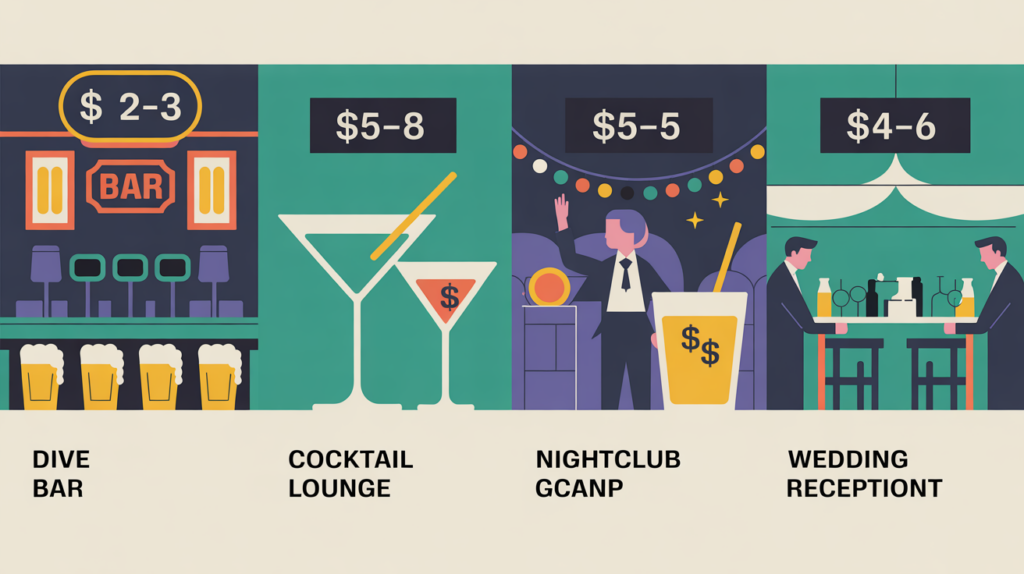
- Dive bar / neighborhood pub: $40–$150 per shift. Lower drink prices and regulars who tip on habit rather than percentage.
- Casual restaurant or sports bar: $100–$200 per shift. Steady volume, moderate tab sizes.
- Upscale restaurant or cocktail lounge: $150–$400 per shift. Higher check averages mean percentage-based tips are much larger.
- Hotel bar or resort: $200–$500+ per shift. Tourists and business travelers tend to tip generously.
- Nightclub (high volume): $300–$1,000+ per shift. Bottle service can push a single night’s tips into four figures.
- Private events (weddings, corporate): $300–$1,000 per event. Often shorter shifts with an affluent, generous crowd.
Do Bartenders Make Good Money in Tips?
Yes — tips are the majority of a bartender’s income. Industry estimates put tips at 75–85% of a bartender’s total take-home pay. The base wage is largely a floor, not the paycheck.
According to the U.S. Bureau of Labor Statistics (BLS), the median hourly wage for bartenders was $16.12 in May 2024 — and that figure includes reported tips. The BLS number is widely considered an undercount because bartenders don’t always report every dollar of cash tip income. Real-world earnings are typically higher.
Glassdoor estimates total bartender compensation (base + tips) at just under $60,000 per year for the average U.S. bartender. High earners in major cities or premium venues routinely clear six figures.
How Much Do Bartenders Make Per Hour Including Tips?
At the median BLS wage of $16.12/hr, an 8-hour shift yields about $129 in base pay. Add the average $150 in tips and the effective hourly rate jumps to roughly $35 per hour. On a busy shift at a good venue, effective hourly earnings of $40–$60 are common for experienced bartenders.
The federal tipped minimum wage is just $2.13 per hour — employers can pay this rate as long as total wages plus tips reach at least $7.25/hr (the federal minimum wage). Many states have eliminated or raised this tip credit, so check your state’s rules. In practice, most bartenders earn well above the tipped minimum because the role sits higher on the tipped employee ladder than most.
What Factors Affect How Much a Bartender Makes in Tips?
Tip income is highly variable. The biggest drivers are:
- Venue type: High-end and high-volume venues generate bigger tabs and bigger tips.
- Shift timing: Friday and Saturday nights consistently outperform weekdays. Holiday shifts often bring a significant bonus — experienced bartenders report earning an extra $200–$500 on New Year’s Eve, St. Patrick’s Day, or the Fourth of July.
- Location: Bartenders in New York City, San Francisco, Seattle, Boston, and Washington D.C. earn substantially more than the national average, both in base pay and tips. States with the highest average tipping rates include New Hampshire (averaging 20.47%), while Idaho has the lowest tipping rates.
- Experience and people skills: A skilled bartender with regulars who request them by name consistently out-earns a newer bartender at the same venue. Tips aren’t just about drink quality — connection and personality are major factors.
- Tip structure: Some venues use tip pooling, where tips are split among all front-of-house (and sometimes back-of-house) staff. Others let bartenders keep everything they earn directly. Understand your venue’s policy before accepting a position.

How Much Do Bartenders Make Per Year With Tips?
Working four to five shifts per week at the $150/night average puts annual tip income around $28,000–$39,000 — on top of base wages. Combined, total annual earnings typically fall between $55,000 and $65,000 for a full-time bartender at a solid venue.
Part-time bartenders (2–3 shifts/week) commonly earn $25,000–$40,000 all-in. High earners at premium venues or in high cost-of-living cities can clear $80,000–$100,000+, especially when working nightclub, resort, or private event shifts consistently.
Annual Earnings Estimate by Shift Volume
- 2 shifts/week at $150/night: ~$15,600/year in tips
- 4 shifts/week at $150/night: ~$31,200/year in tips
- 5 shifts/week at $250/night (upscale venue): ~$65,000/year in tips
What Type of Bartending Pays the Most Tips?
Nightclub and bottle service bartending tends to produce the highest single-night totals — sometimes $500–$1,000 or more. But high-volume hotel bars (particularly airport hotels) offer something nightclubs don’t: consistent tips every day of the week, not just weekends.
Private events — weddings, corporate galas, and fundraisers — are also excellent earners. Shifts are typically shorter, guests are in a celebrating mood, and generous tipping is expected. Many experienced bartenders pursue a mix of venue work and private events to maximize annual income.
Do Bartenders Have to Report Tips to the IRS?
Yes. According to the IRS, all tips — cash and credit card — are taxable income and must be reported. Bartenders are required to report tips of $20 or more per month to their employer by the 10th of the following month, and to include all tip income on their annual tax return.
Credit card tips are automatically tracked through most POS systems, so the IRS already has access to that data. Cash tips require the bartender to keep their own daily records. The IRS recommends keeping a daily log of tips received.
New for 2025: Under recent federal legislation, tipped workers may be eligible to deduct up to $25,000 per year in qualified tip income from federal taxes (for tax years 2025–2028), with the deduction phasing out above $150,000 in income. See the IRS guidance on the qualified tips deduction for details. This makes accurate tip tracking more important than ever — you need documented records to claim the deduction.
How Can Bartenders Make More in Tips?
Tip income isn’t fixed. Here are the most effective ways to increase it:
- Work the right shifts. Friday and Saturday nights at high-volume venues pay more than any other scheduling choice.
- Build regulars. Customers who return and request you specifically tip consistently and tip well. Learn names, remember drinks, and create genuine connections.
- Upsell premiums. A customer who tips 20% on a $12 well drink tips $2.40. The same customer tipping 20% on an $18 craft cocktail tips $3.60 — with no extra effort on your part.
- Work private events. Events like weddings and corporate parties tend to produce higher per-hour tip income than regular shifts.
- Track your tips. Knowing exactly what you earn per shift, per venue, and per day of week lets you make smarter scheduling decisions. An app like Tip Boss makes this effortless — log each shift in seconds and see your earnings trends over time.

Frequently Asked Questions
How much do bartenders make in tips per night?
The average is around $150 per night according to Indeed data, but most bartenders realistically earn $100–$300 depending on the venue, shift day, and location. Nightclub and premium venue bartenders can earn $500–$1,000+ on a busy night.
Do bartenders make good money in tips?
Yes — tips typically make up 75–85% of a bartender’s total income. A full-time bartender at a decent venue in a mid-sized city can earn $50,000–$65,000 per year including tips. High earners at premium venues in major cities frequently top $80,000–$100,000.
What percent of a bartender’s income is tips?
Industry estimates put tips at 75–85% of total bartender pay, making them far more important than the hourly base wage. The BLS median wage of $16.12/hr (May 2024) already includes reported tip income, but many bartenders believe even that figure undercounts real-world earnings.
How much do bartenders make per hour including tips?
At a typical venue on a decent shift, the effective all-in hourly rate (base + tips) commonly runs $25–$40/hr. Bartenders at high-volume or upscale spots regularly see effective rates of $40–$60/hr or more on strong nights.
How much do bartenders make at a bar vs. a restaurant?
Standalone bars and nightclubs often produce higher nightly tip totals because customers come specifically to drink, resulting in more drink-focused tabs. Restaurant bar shifts depend heavily on how many bar-only guests versus dining tables the bartender serves. Upscale restaurants can rival or beat standalone bars due to high check averages.
Do bartenders have to report tips to the IRS?
Yes. All tips — cash and card — are taxable income under IRS rules. Bartenders must report tips of $20 or more per month to their employer and report all tip income on their tax return. As of 2025, a new federal deduction may allow eligible tipped workers to deduct up to $25,000 in tip income annually — making accurate recordkeeping more valuable than ever.
What type of bartending pays the most in tips?
Nightclub bartending (especially bottle service) and high-volume hotel/resort bartending produce the highest tip potential. Private events — weddings and corporate functions — offer excellent hourly tip rates in shorter shifts. Airport hotel bars are notable for consistent tips seven days a week due to constant traveler turnover.
How can bartenders make more tips?
The biggest levers are working premium shifts (Friday/Saturday nights), building a loyal regular clientele, upselling higher-margin drinks, and pursuing private event work. Tracking your tips by shift and venue also helps you identify which situations pay best so you can seek out more of them.