Saying no is one of the most important skills a server or bartender can have — and one of the least taught. Whether a guest is pushing for a substitution the kitchen can’t do, asking for a fifth round they really don’t need, or making a demand that’s simply outside your control, how you decline matters. Do it wrong and you tank your tip. Do it right and the guest barely notices.
Here are 10 creative, practical ways to say no on the floor — with real language you can use tonight.

Why Knowing How to Say No Is a Money Skill
Most servers default to two bad options when a guest asks for something they can’t deliver: an awkward, flat “I can’t do that” — or a panicked “let me check” that leads nowhere. Both kill the table’s vibe and quietly erode your tip. The good news is that there’s almost always a better third option. The goal isn’t to be a pushover or a gatekeeper. It’s to redirect, reframe, or decline in a way that keeps the guest feeling cared for.
10 Creative Ways to Say No as a Server
1. Lead With What You Can Do
The fastest way to soften a “no” is to immediately follow it with a “yes.” Instead of “We can’t do that substitution,” try: “We can’t swap out the risotto, but I can get that on the side for you — would that work?” You’ve declined the exact request while still solving the underlying problem. Guests rarely care about the specific ask; they care about feeling accommodated. Give them a win and they’ll remember the win, not the no.
2. Blame the Kitchen (Nicely)
Sometimes the easiest no is a structural one. If a guest is requesting a modification that genuinely isn’t possible during service — a swap the kitchen can’t execute mid-rush, an item that’s already been 86’d, a dish that’s prep-heavy and not available — say exactly that: “The kitchen’s running at full capacity right now and I wouldn’t want to hold up your table — they’ve 86’d that modification for tonight’s service.” You’re not refusing them; the system is. Most guests accept operational constraints without a second thought.
3. Use the “Unfortunately” Sandwich
Acknowledge, decline, redirect — in that order. It sounds like: “That sounds like a great idea, and unfortunately our chef doesn’t allow substitutions on that dish — but the [alternative] is really close to what you’re looking for.” The acknowledgment shows you heard them. The redirect shows you’re still working for them. The word “unfortunately” signals that this is a real limitation, not indifference — it lands far softer than a flat “no.”
4. Turn It Into a Recommendation
When a guest asks for something you don’t have — a cocktail that’s been 86’d, a menu item from a previous season, a dish that’s sold out — flip it into a selling opportunity: “We actually just ran out of that one, which is always a good sign. What I’d recommend instead is the [similar item] — it’s a similar vibe and it’s fantastic tonight.” You’ve declined, upsold, and built credibility as someone who knows the menu. That combination tips well.

5. Give Them the Policy Without Making It Personal
For requests that bump against house policy — splitting checks after you’ve already run the card, sitting at a reserved table, taking a reservation for a party larger than your section holds — frame the no as a rule, not your call: “Our policy on that is [X], and I want to make sure I’m not getting you or myself in a tough spot — let me see what I can do within that.” You’re not the villain. The policy is. And you’re still trying to help. That distinction matters enormously when a guest is frustrated.
6. Slow Down Service Instead of Cutting It Off Cold
This one’s specifically for bartenders and servers who need to manage a guest’s consumption before making a formal cut-off. If you’re seeing early signs of intoxication, don’t reach immediately for the “I’m cutting you off” conversation — start by quietly slowing down. Bring water unprompted. Suggest food. Take a little longer to check back. You’re not refusing service yet; you’re managing pace. In many cases, this gives the guest time to level out without the confrontation. Alcohol server training programs like TIPS and ServSafe refer to this as “strategic slow service” — and it works.
7. Make the Cut-Off Private and Calm
When it is time to cut someone off, the delivery matters as much as the decision. Never do it loudly or in front of their table. Pull the manager in, find a quieter moment, and keep the language neutral and final: “Hey, I want to make sure you’re having a good time and get home safely — I’m not going to bring another round, but let me get you some water and we can sort out your check whenever you’re ready.” Under dram shop laws that exist in most U.S. states, continuing to serve a visibly intoxicated guest can expose you and your establishment to serious civil and legal liability. Knowing how to cut someone off gracefully isn’t just good service — it’s legally important.
8. Involve Your Manager Before You Have To
One of the most underused tools in a server’s toolkit is the manager escalation — not as a defeat, but as a resource. If a guest is pushing back hard on a “no” that you’ve already delivered, or if the request is genuinely above your authority level, use your manager as a pressure valve: “Let me grab my manager — they have more flexibility on this than I do.” The guest feels heard and escalated to the right person. You’ve removed yourself from the confrontation. And your manager is paid to handle exactly this situation. Use them.
9. Say No to the Request, Not to the Person
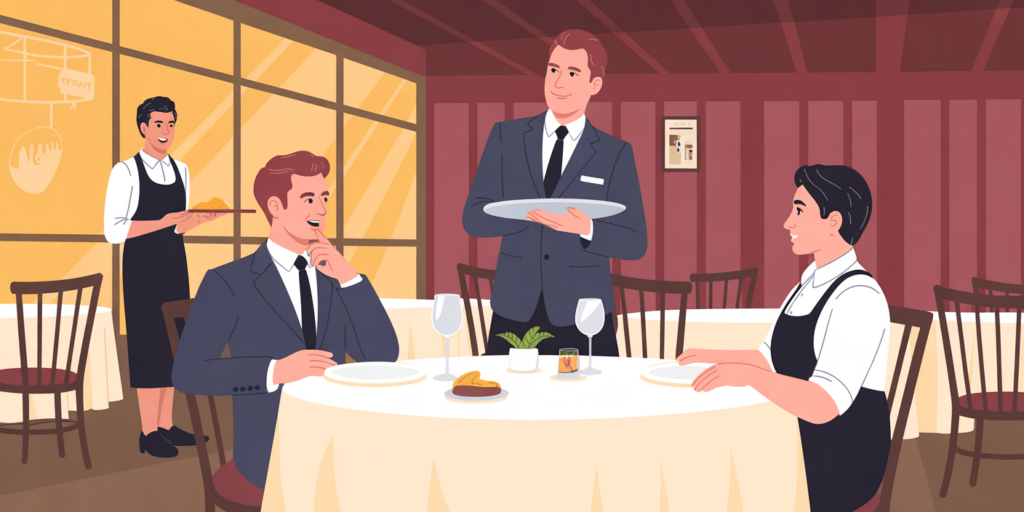
The phrasing “I can’t do that for you” puts the relationship on ice. The phrasing “That’s not something we’re able to do tonight” keeps it warm. It’s a small distinction with a big impact. When you make a guest feel like the problem is personal, they get defensive. When the limitation is situational — tonight, this menu, this kitchen — they accept it far more easily. Stay warm, keep eye contact, and never let your body language say what your words won’t. The guest is watching both.
10. Know When to Just Say It Directly
Not every no needs to be wrapped in a bow. Some requests are genuinely unreasonable — a guest who wants a free round to compensate for a 5-minute wait, someone pushing back on a legitimate ID check, a guest who’s being verbally abusive to your coworkers. In those moments, clarity is kindness: “I’m not able to do that.” No apology. No long explanation. No opening for negotiation. Delivered calmly and without edge, a simple, direct no is often more effective — and more respectful — than any creative reframe. Your time, your safety, and your team’s wellbeing matter too.
How Do You Say No Without Losing a Tip?
The short answer: the delivery matters more than the decision itself. Guests rarely punish a “no” — they punish a dismissive, cold, or disorganized “no.” If you acknowledge the request, offer an alternative or explanation, and stay warm throughout, most guests tip on the service experience overall — not on whether you fulfilled every specific ask. The best servers make guests feel taken care of even when the answer is no.
Can a Server Refuse to Serve a Customer?
Yes, in most circumstances. Servers and restaurants have broad legal rights to refuse service for legitimate operational, behavioral, or safety reasons. What they cannot do is refuse service on the basis of a protected characteristic — race, color, religion, sex, or national origin — which is prohibited under the Civil Rights Act of 1964. Always check your state’s specific laws, as additional protections may apply in your jurisdiction.
Frequently Asked Questions
How do you politely say no to a customer at a restaurant?
Lead with what you can do, and use the word “unfortunately” to frame the limitation as real rather than arbitrary. Offering an alternative in the same breath — “I can’t do that, but here’s what I can do” — keeps the guest feeling cared for even when the answer is no. Stay warm, make eye contact, and move quickly to a solution.
How do you tell a customer you can’t do something?
Frame it as a situational limitation rather than a personal refusal. “We’re not able to do that tonight” lands softer than “I can’t do that for you.” Always follow the decline with an alternative, an explanation, or an offer to escalate — so the guest knows you’re still working for them, even when the specific ask isn’t possible.
What do you say when you cut someone off as a bartender?
Keep it private, calm, and brief. Something like: “I want to make sure you get home safe tonight — I’m going to stop here on the drinks, but let me get you some water and we’ll sort out your check when you’re ready.” Avoid making it public, avoid negotiating, and always involve a manager for backup. Document the situation for your own protection.
How do servers deal with difficult customers?
The key is to separate the request from the person, stay calm regardless of tone, and always offer a path forward. Actively listen, acknowledge the frustration, and then redirect toward what you can do. If a guest escalates beyond what you can manage, escalate to your manager immediately — that’s what they’re there for.
What are the rules for refusing service at a restaurant?
Restaurants can refuse service for legitimate reasons including intoxication, disruptive behavior, safety concerns, or capacity limits. They cannot refuse service based on protected characteristics under the Civil Rights Act of 1964. Most states also have dram shop laws that make it a legal requirement to refuse service to visibly intoxicated guests — check your state’s specific laws for details.
Can a server get in trouble for serving someone who is drunk?
Yes. Under dram shop laws in most U.S. states, a server or bartender who continues serving a visibly intoxicated guest can face civil liability — and in extreme cases, criminal charges — if that guest causes harm. This is one of the most legally significant situations where saying no isn’t just a service decision; it’s a professional and legal obligation.
How do you say no to a substitution request at a restaurant?
Be honest and quick: “The kitchen can’t accommodate that modification tonight, but here’s what I can do…” Always offer an alternative or workaround if one exists. If there genuinely isn’t one, explain why briefly — consistency, timing, or the integrity of the dish — and move on warmly. Guests respect honesty far more than a vague runaround.